The reasonable question to ask before joining a study is not whether you trust the doctor in front of you. It is what happens if that trust turns out to be misplaced. Clinical research in the United States is built around that question, with several independent layers of oversight that operate whether or not any individual site behaves well.
Who Sets the Rules
Studies of drugs and devices run under federal regulation. The parts that matter most to a participant are 21 CFR Part 50, which governs informed consent, 21 CFR Part 56, which governs Institutional Review Boards, and 21 CFR Part 312, which governs investigational new drug applications. Federally supported research additionally falls under 45 CFR Part 46.
Layered on top is ICH-GCP, the international Good Clinical Practice standard. It is not United States law in itself, but sponsors write it into their protocols and contracts, and site staff are trained and periodically retrained against it.
An IRB Reviews Everything Before Anyone Enrolls
An Institutional Review Board is an independent committee whose job is to protect participants. Before a single person is approached, the IRB reviews the protocol, the informed consent form, recruitment materials, and anything else a participant will see. Enrollment cannot begin until it has approved both the protocol and the consent form.
The IRB also reviews compensation — the amount, the method, and the timing — specifically to make sure payment does not become an inducement that interferes with a free decision. Its oversight continues after approval through periodic review.
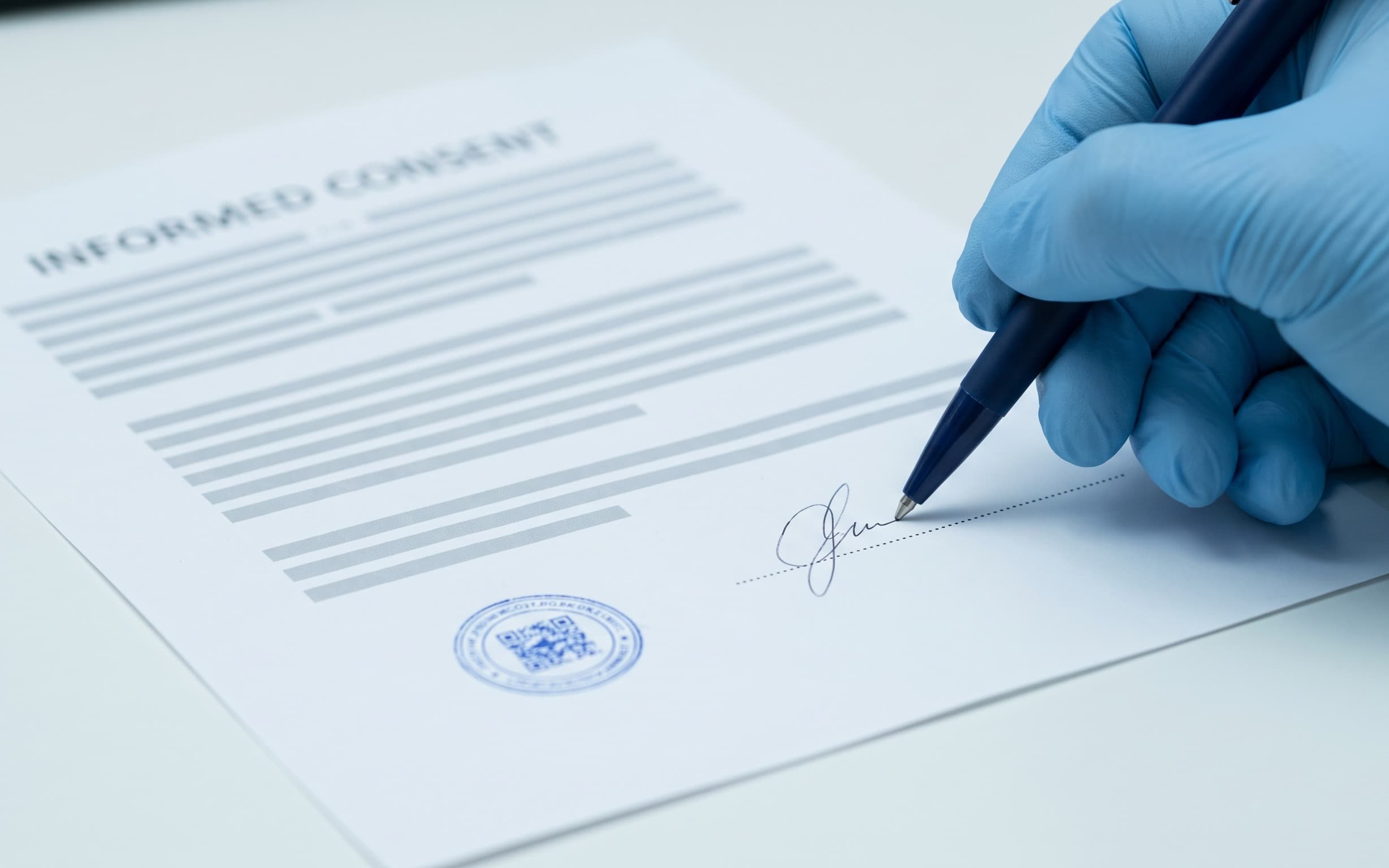
Informed consent must be obtained before any trial-related examination is performed, not at some later point once testing is under way. You are entitled to enough time to consider participation, to discuss it with whoever you choose, and to a copy of the form you signed. Consent is a process that continues for the length of the study, not a signature collected once at the start.
Monitoring Continues Throughout the Study
Once a study is running, the sponsor sends monitors to the site to verify that what was recorded matches the source records and that the protocol is being followed. Adverse events are documented and reported on defined timelines, and serious ones go to the sponsor, the IRB, and where required the FDA.
Many studies also have an independent data monitoring committee — a group with no stake in the outcome that periodically reviews accumulating safety data and can recommend that a study be modified or stopped. Neither the site nor the sponsor can overrule what the regulations require of that process.
What You Can Do at Any Point
- Withdraw from the study, for any reason or none, without penalty
- Ask what a procedure is for and what is done with your data
- Ask for the study’s registration number and look it up yourself
- Contact the reviewing IRB directly — its details are on your consent form
That last one is worth knowing about. The IRB’s contact information is on the consent form precisely so that you can raise a concern with someone who is not the site.
How This Works at Anmed Health
Every study we run is reviewed and approved by an IRB before enrollment opens, and our team is trained to ICH-GCP. Consent discussions happen in English or Spanish, at whatever pace you need, and you take the form home if you want time with it.
None of that is a favor we extend. It is the baseline the regulations set, and a site that treats it as optional is a site you should walk away from.
Ask Us Anything Before You Decide
If you are considering a study and want to understand the protections before you commit, our coordinators will go through them with you. There is no obligation to enroll in anything.
This article is for general educational purposes and is not medical advice. It does not describe or promote any investigational treatment. Screening does not guarantee eligibility for a study, and study participation requires medical evaluation. Speak with a licensed healthcare provider about your individual situation.