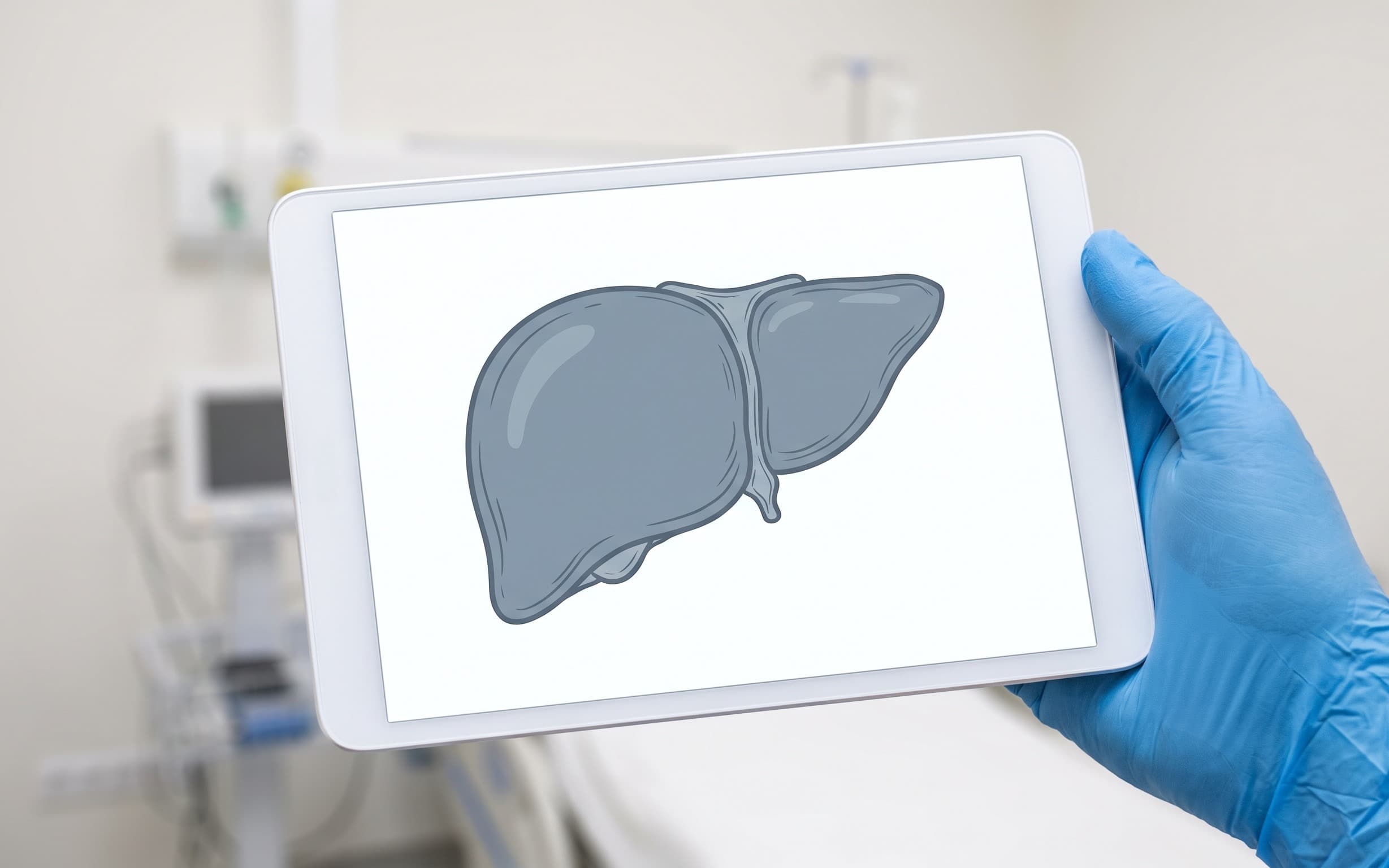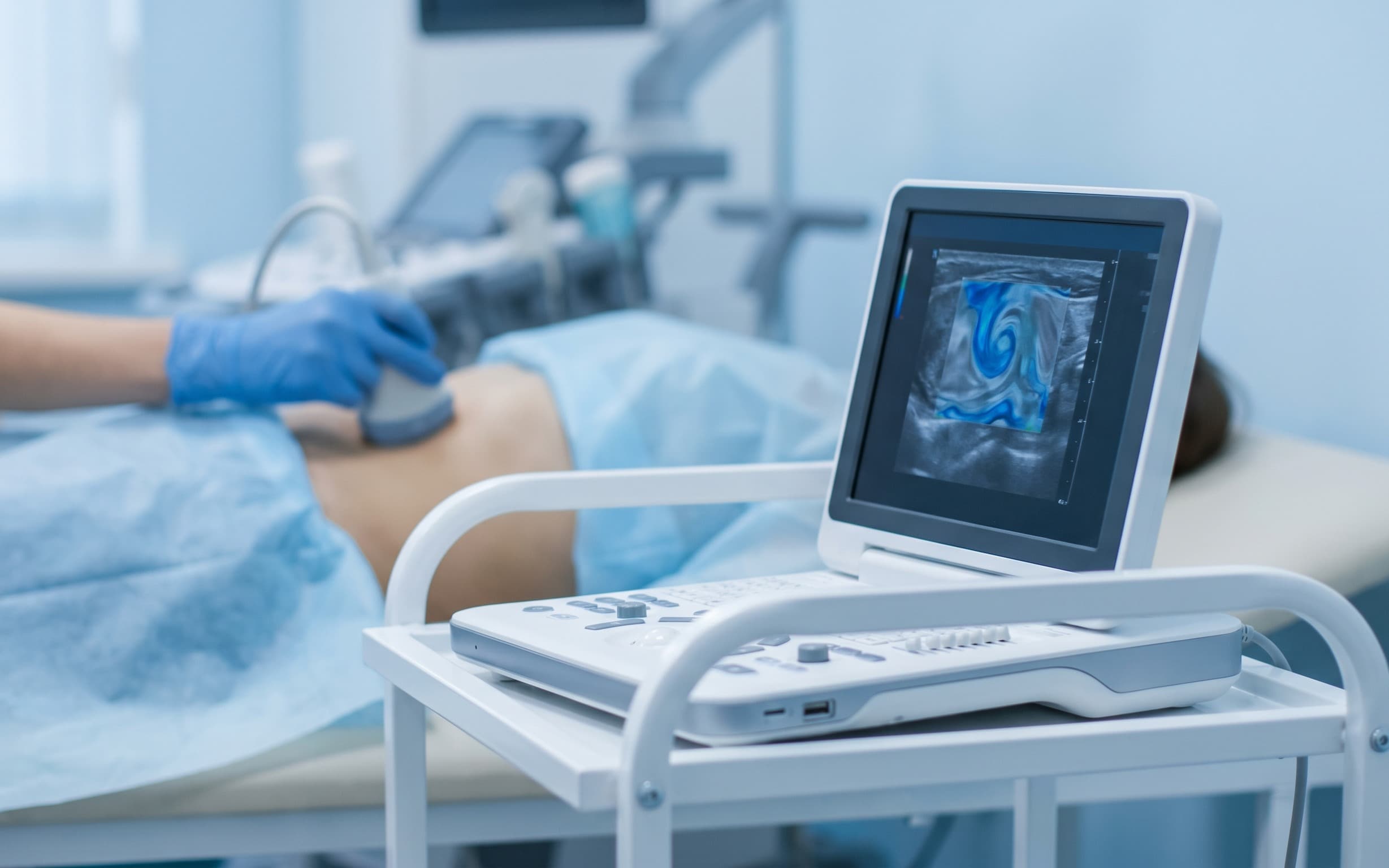
For decades, the only reliable way to know how much scarring a liver had was a biopsy — a needle, a small sample, and a recovery period. Transient elastography, widely known by the FibroScan brand name, estimates the same thing in about ten minutes without breaking the skin. That shift is why liver screening now reaches people who would never have agreed to a biopsy.
What a FibroScan Measures
The device sends a painless mechanical pulse into the liver through the skin and measures how fast the resulting wave travels. Stiffer tissue carries the wave faster. From that it reports two separate things:
- Liver stiffness, reported in kilopascals, used as a surrogate for fibrosis — scarring of the liver tissue
- Controlled attenuation parameter (CAP), reported in decibels per meter, which estimates how much fat has accumulated in the liver
Those two numbers answer different questions. Fat tells you something is happening; stiffness tells you how far it has progressed. A liver can hold a good deal of fat with little scarring, and the reverse is also possible.
What the Scan Is Actually Like
You lie on your back with your right arm raised. The operator places a probe between your ribs on the right side and takes a series of readings. There are no needles, no contrast dye, and no sedation, and you can drive yourself home afterward. Most protocols ask you to fast beforehand, since a recent meal can affect the reading.
A scan is not simply accepted because the machine produced a number. Published reliability criteria call for at least ten valid measurements, a success rate above 60%, and a tight spread between those measurements. A scan that does not meet them should be repeated rather than interpreted, which is one reason the operator may take more readings than you expect.
Why It Matters for Fatty Liver Disease and MASH
Fatty liver disease is usually silent. It produces no reliable symptoms in its early and middle stages, so it is often found incidentally or not at all. Because elastography is quick and non-invasive, it can be offered to people who have risk factors but no complaints — which is precisely the group most likely to be carrying undetected disease.
It is also increasingly used inside clinical research. Studies in MASH and related conditions frequently use elastography during screening to identify candidates and to follow participants over time.
What the Numbers Do and Do Not Tell You
A FibroScan result is an estimate, not a diagnosis. The thresholds used to separate stages of fibrosis differ depending on the underlying cause of the liver disease and on which study you consult, and several ordinary things — recent food, inflammation, congestion, body habitus — can push a reading up without more scarring being present.
A result is meaningful only when a clinician reads it alongside your laboratory values, your history, and any imaging. Nobody should stage their own liver from a single number, and any decision about treatment belongs with a licensed physician who knows your medical history.
How Anmed Health Uses It
Our Kendall site performs elastography on site as part of screening for fatty liver and MASH studies. Participants who qualify for those protocols receive the scan at no cost as part of the screening process, and the result is yours regardless of whether you go on to enroll.
For a lot of the people we see, it is the first concrete information they have ever had about their liver.
Find Out Where You Stand — For Free
If you have risk factors for fatty liver disease and have never been formally screened, a FibroScan at our Kendall clinic takes under 10 minutes, requires no preparation beyond fasting, and gives you real answers.
This article is for general educational purposes and is not medical advice. It does not describe or promote any investigational treatment. Screening does not guarantee eligibility for a study, and study participation requires medical evaluation. Speak with a licensed healthcare provider about your individual situation.